Crunch

Time is a rare commodity in our current day and sage. With so many things seeking our attention, I’ve often felt as if I’m being stretched thin just trying to cram all the things I want to do into a day. There’s work for one. Then there’s the need to eat food, drink water and sleep. All of which takes a good chunk of the day and already most of what little time I have is gone. That is, of course, not taking into consideration my time-heavy hobbies. I’ve often found it a juggling act trying to designate what precious few hours of my spare time to writing, reading, playing video games and binge watching Netflix shows.

How anyone manages to follow their favourite Twitch Streamers every week is beyond me. And that’s also not factoring in my involvement at conventions or going out for drinks with friends/ family.

I know that it’s quite terrible of me but I’ve had, on occasion, resented the fact that I promised to head out to dinner when I could have spent that time towards finishing a particular video game or wrapping up a chapter for the story I’m currently writing. In saying that, though, constantly living inside my own head has its downsides as well. Over the years, I fear it has become a systematic problem. One I hope to overcome as I learn to be more welcoming to suggestions that I take a step back and take a breather. 

In any case, it’s one of the many reasons why my gaming impressions have been a little more sporadic. Trying to keep on top of everything pop culture is a tiring feat and not quite possible for someone who does not work in the industry. Particularly with movie after movie coming out. I’m looking at you John Wick, Aladdin, Toy Story 4, Godzilla, Spider-Man Far From Home, Men in Black and Dark Phoenix! As of the time that I’m writing this post, I’m still two-third into Days Gone. It won’t be long until Judgement releases and then Fire Emblem: Three Houses

That said, I somehow or other managed to cram in a trip to Supanova again this year. There weren’t many celebrities that caught my eye (and I didn’t manage to catch a glimpse of Elijah Wood), but I thought it would be an experience simply to appreciate identifying characters from shows and making glib comments about a certain franchise. 

Also posters, keychains and things to clutter my desk with. Yet despite earning a steady income, I’ve found myself becoming much more miserly with my spending. Over the last two Supanova events, I’ve found myself gravitating towards the seminars and panels that are also held during these events. They’re not as grandiose as the ones in America and often there’s quite a few seats up for grabs but I’ve begun to truly enjoy these little tete a tete with authors, voice actors and well-renowned icons. 

During this year’s Supanova, Bleachpanda and I sat in on a panel about writing fight scenes in novels. Though the authors came from a wide range of genres, they were all able to provide some tips and tricks on how to elevate a story. It served to be an eye-opening experience and I hope to perhaps emulate them in my own endeavours. 

But perhaps I should stop focusing on the newest and latest. Yes, it can be frustrating to see so many others start and finish a new game just days from release but perhaps their life-situation is different. Perhaps they’ve cut out other things from their life so that they can squeeze in just one more episode of Umbrella Academy.

I can’t help the fact that so many things tickle my fancy and that I feel compelled to consume so much media. At the very least, though, I can give each and every one that does interest me the love it deserve.

Reclaiming the Term

Girl gamer is a term that has carried a lot of baggage for many years. As someone who has played games since her infancy, I’ve often struggled to be ‘one of the boys’ and to show my greater appreciation without being dismissed out of hand. It’s why I’ve avoided overly competitive games such as Call of Duty and Counter Strike, instead focusing on the single-player experience where I won’t be so easily judged for my performance. In fact, I can still remember that in my final year of high school, I was treated with some bemused comments about the excitement for the release of Starcraft 2. Maybe because none of them had pegged me as a gamer (although, I’d been ranting about Kingdom Hearts Birth by Sleep and Dissidia for a good long while and had actually brought my Playstation Portable, as well as my Nintendo DS to school numerous times). Or perhaps it was simply the bias that games were for boys and me, being female and liking games, was a strange anomaly.

So when I heard about the Girl Gamer festival, I was intrigued by how it sought to reclaim the term and give coverage to the many women in the industry – whether they be content creators, esports athletes, those working for a developer and consumers. Held in Chatswood, Sydney, as part of Vivid, it shone a light that females can serve as shoutcasters. They can dominate the leaderboards with their kill/death ratio. And that they can play video games, goddamnit, with the best of them. This was exemplified by the appearance of WomANZ, who had an interesting discussion about how to better represent the women that see gaming as an intrinsic part of who tehy are.

I have to say, though, that the event was a lot smaller than I had anticipated. While I had been inside Chatswood Concourse for the many A New World concerts, I had thought that there might be a little more to do. Instead, the concert stage was used for both the Counter Strike: Global Offensive matches as well as for panels and talks by leading women that are involved in the industry.

Though I have never been a fan of esports – particularly when it comes to the MOBA genre, I was enthralled from beginning to end with the match between Fusion Gaming and Downfall Angels that I bore witness to on the 9th of June (the weekend before E3). I delighted in the fact that the teams were also diverse. 

The only thing I found strange was that they were all unfamiliar with playing on LAN. I must be showing my age if I can still remember the time when all the boys in my grade had used the network of computers in the school library to play the original Defence of the Ancients as well as the Dust map of Counter Strike.

There was also a talk from a community manager from the local Bethesda team that brought a nice emphasis that telling someone to die is not conducive to making better video games. The key to making a good complaint is providing context and detailing the exact nature of the issue so that it can be taken to the programmers. It also helped introduce the Solomon-Asch social experiment on conformity and peer pressure. 

Other than the central concert stage, there was a Smash tournament event. Unlike the other events, this was dominated by a lot of young boys and grown men. Next to the collection of Switches were stalls for AIE, a gaming workshop and one that enticed with precious chocolate and candy.

And on the far side were two Switches dedicated to Just Dance 2019. Far too embarrassed to humiliate myself, I simply bore witness to a man that had memorised the entirety 53 songs and watched as he hit perfect, perfect and perfect throughout the day. As well as several girls in cosplay try their best to compete against him.

While there were many things that could be improved to how the Girl Gamer Sydney festival could have been held, I was still impressed by its brazen attempt to reclaim the term and rebrand it as something positive. To see all-female esports teams tearing into each other with AK47s or knifing each other for fun was great considering how male-dominated the industry is. And if you look at the statistics of how many female gamers there are, it’s a no-brainer. 

Circles and Lines

For quite a few years, I thought I was a dab hand at puzzle games. Throughout the Professor Layton series, I often employed cool logic and calm rationale to many a dastard puzzle. And even when I stumbled on occasion, I could figure most out with a hint coin or two before resetting, ensuring I had the perfect run of picarats. The only time I would look up an online guide were when it came to those nefariously difficult sliding puzzles or when the most logical answer did not fit into how the game characters deduced how a crime was committed. I’m looking at you Ace Attorney! In fact, many of the old adventure titles required one to think outside of the box. The solution always had to be just a little convoluted so that when you were successfully trained into wondering whether there was a trick, the game designers would throw a simple answer into the mix.

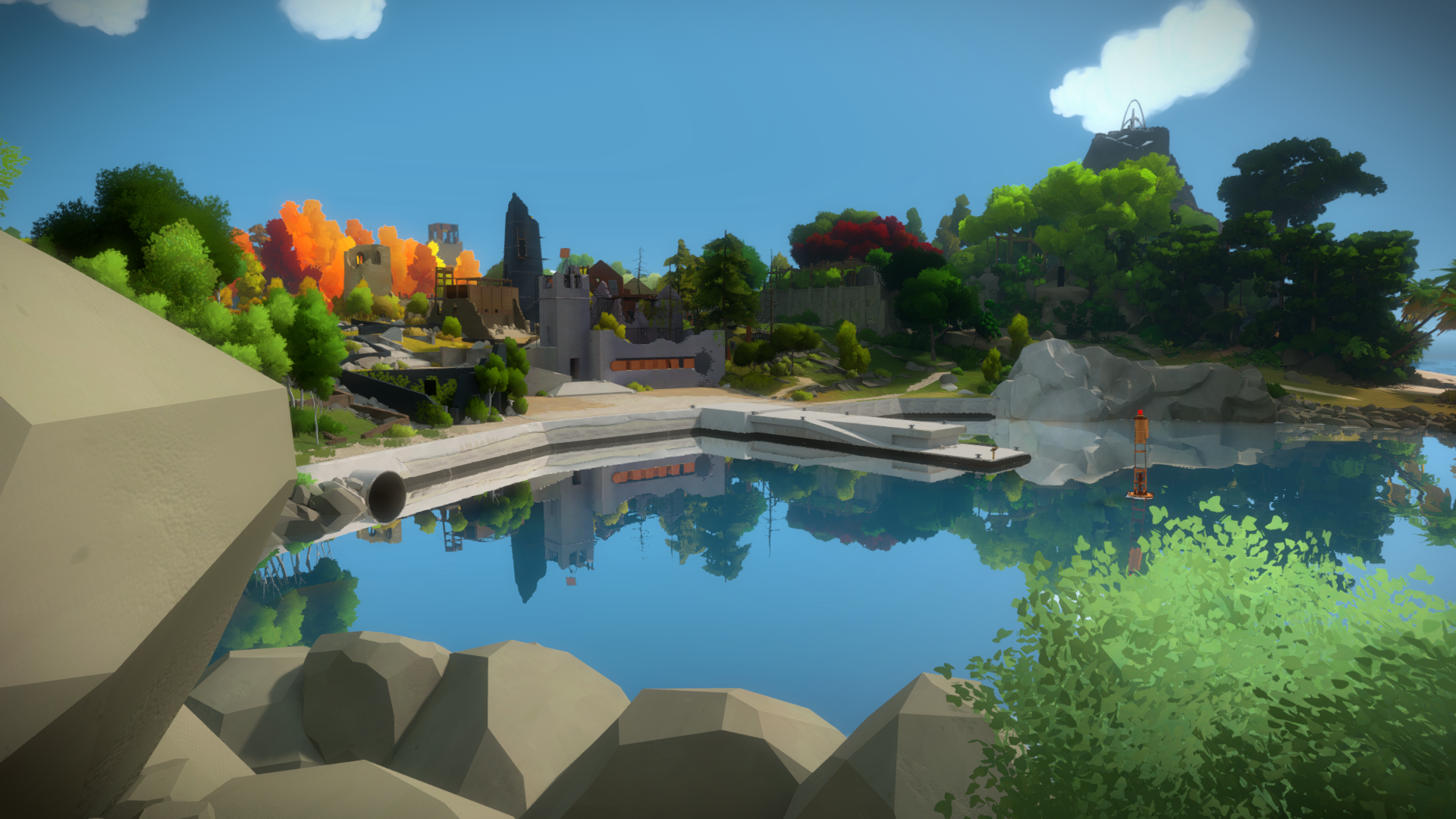
So, when I finally downloaded The Witness from the Epic Games Store, I thought it would be a simple matter of completing the game within a reasonable period of time. Yet, kust as I emerged from the tutorial/ opening stages, I found myself floundering. Puzzle after puzzle were quickly stumping my intelligent self and I was on the verge of booking an anger management class.

The Witness was a game that challenged how I usually played. This was not something I could brute force my way through. Nor could I simply crank down the difficulty and expect the solutions to be at my fingertips. This was about observing the world around me and figuring out the rules that I needed to solve each one. It was also about walking away when one hit a dead-end and trying something a little different.

This concept was further expanded upon by many of the audiologs that could be found. The Witness does not have an overarching narrative for why the player character was on the island with an entire host of puzzles. Rather, it feels like an exercise of meditation. Of finding that perfect zen and falling into a trance as one solves puzzle after puzzle, while also enjoying the scenery as you walk from one area to the next. A YouTube video I found put it quite succinctly, pointing out the focus on perspective.

As such, The Witness is all about finding that Eureka! moment and savouring that feeling of accomplishment when the answer finally presents itself. There’s also, apparently environmental puzzles but following the guide and its focus on the panels, I hardly noticed – so fixated was I on seeing the ending.

Of course, much of this was lost on me as I endeavoured to race through the game. Frustrated that it was taking much longer to solve what I thought would be simple puzzles, I resorted to using an online guide for my entire playthrough. I will admit that it was a poor decision and I cheated myself from the revelations that would have seen me to victory had I simply pushed on and chosen to explore.

Still, those tetromino puzzles would have most likely prevented me from further progress considering how obscure some of their solutions could be. After going online, I saw many posts that expressed their rage and frustration when it came to these puzzles – with many resorting to cutting out shapes and sticking them to their monitor or on grid paper.

If you want a frustrating game that keeps challenging you, The Witness might be for you. For this humble blogger, though, I’d rather enjoy something a little more on the nose with its core themes. I’d also like to be deeply hooked by a strong narrative that parses out answers on a much more regular basis. In any case, The Witness was an intriguing experience – if not a particular fun one. Still, if a focus on gameplay and seeing circles and lines is your idea of enjoyment, I’d heartily recommend this title.

Taking Justice into One’s Own Hands

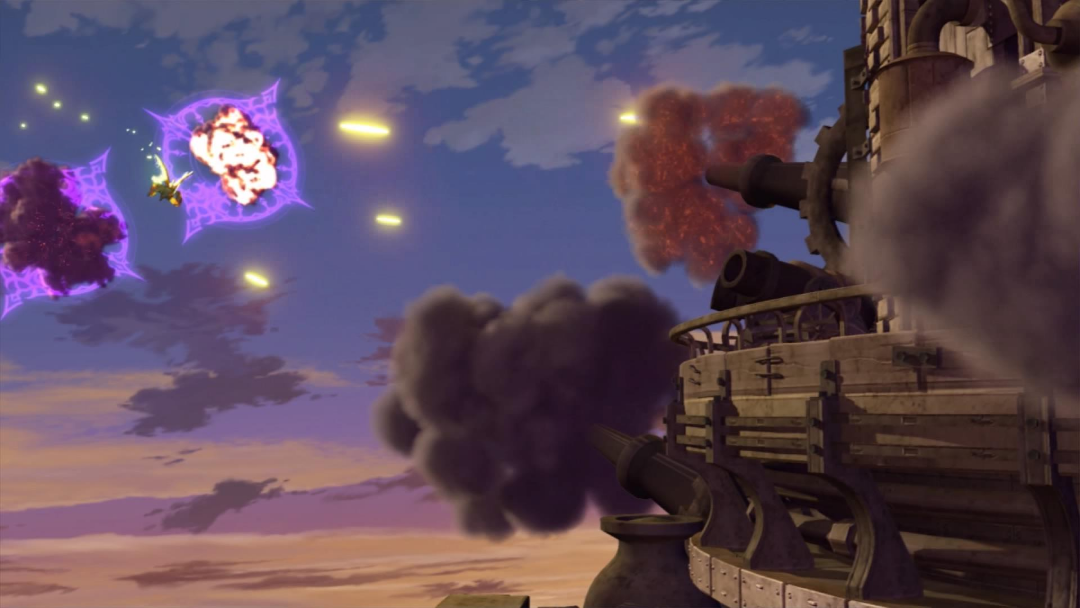
Overshadowed by the impending launch of Kingdom Hearts 3, it was not until the start of May that I began my adventures with Tales of Vesperia: Definitive Edition. I had heard good things about the game, particularly the eclectic cast of characters. And as I played through the story, it was refreshing to see someone that was willing to make the hard decisions instead of spouting idealistic platitudes. Yuri Lowell was a character that took things into his own hands despite holding onto lofty dreams. Though the game was very much driven by the search for MacGuffins and followed many familiar story beats, I was still enthralled from beginning to end.

Image may contain: sky, cloud, night and outdoor

It’s often quite strange, looking back from defeating a world-ending threat, that the entire journey started with the search for the Aque blastia. This was an orb taken from a fountain in the lower quarter of Zaphias (the capital of the Empire) and was used to help regulate the flow of water for the people living there. Yuri, raised by the good people that lived there, was eager to rectify the problem and promptly set about trying to retrieve it. 

Thrown into a dungeon, he soon met up with Estellise. A Princess as well as a Child of the Full Moon. Fearing that something would happen to Flynn (Yuri’s childhood friend and a member of the Knights), she joins Yuri and his faithful hound, Repede.

And as they strike out together, they are soon joined by the rest of the motley crew that comprises the rest of Tales of Vesperia: Karol, Rita, Raven, Judith, Patty and Flynn. Along the way they uncover corruption as well as ongoing threat to the peace of the planet in the form of an Adephagos that came about because humans abused their technology. To cut through all the terminology used in the game: humans essentially caused the apocalypse because they overused natural resources. It’s essentially a story about climate change and the main characters soon begin championing an alternative way of life because to continue as they have would have only resulted in their destruction. 

A fitting narrative considering the current discourse that flooded recent politics (and still, major powers do nothing, except claiming that global warming is a myth).

I also liked how it explored how justice is doled out. Flynn, the idealist, often has to deal with allowing bad things to happen to good people as he tries to work the system. Yuri, on the other hand, attempts to affect change from outside the law. He does this first by killing Ragou and allowing Cumore to die in quicksand. Crimes, no doubt, but the people that suffered from their tyranny were now free. It’s the classic clash between lawful good versus chaotic good, and perfectly exemplified the difficulties of bringing to justice those that lay beyond the law. And while there are both benefits to each side, they also come with a price.

Beyond the story, what I liked most about Yuri was that he yet another left-handed protagonist. While I appreciate that the majority of the human population is right-handed (myself included), it always gives me pleasure to see lefties represented as not just villains. What was interesting as well was how the character designs for Yuri and Flynn also helped illustrate that the two rivals were foils of the other. Yuri with his long black hair and Flynn, with his short blond. It reminded me of an article I read about with regards to Final Fantasy VII and what went into the creation of Cloud and Sephiroth.

Though the combat felt initially clumsy, at least when compared to more recent entries of the Tales franchise, I was quick to adapt. This was especially pronounced in my encounter with the third boss. It took quite a few tries before I managed to down the creature – adjusting the AI strategies as needed before the wolf was finally toppled. From there, it was fairly smooth sailing with regards to combat and I thoroughly enjoyed most of the other bosses – though I had to break my ‘no item’ rule.

While I never mentioned it before with regards to the Tales games, why is there a fifteen item limit for gels? And ingredients? Why can’t it just be 99 so I can stock up like I usually do in most JRPGs (Japanese Role Playing Games)?

Graphically, the game also shows its age. While character models were upscaled, the backgrounds could have used a bit more work. Particularly when it came to water. The animated cutscenes also looked like set-pieces from another decade and proved to be a little disappointing.

I’d also like to point out that Tales of Vesperia also had one of the worst side quest mechanics that have ever been employed. Many of these are short dialogue events with no clear indication of when they will appear or the time limit to trigger them. After nearly finishing Act 1 of the game, I had to resort to an online guide so that I wouldn’t have to miss all the items and associated titles (with costumes) that I wanted. 

Despite the story for Tales of Vesperia being quite simple and filled with numerous diversions with many of the characters falling into particular tropes, I still found myself thoroughly engaged. In the early stages, battle required a fair level of strategy. When my characters became more powerful, however, it was easy to set up a schematic that enabled me to complete most boss battles with a little help from item usage. 

Image may contain: cloud, sky, outdoor, nature and water
Image may contain: one or more people and indoor
It isn’t everyday that you see a crystallised dungeon. This was one of the more inspired locations.

“Not My Video Game…”

I’ll be honest: I never thought that the discussion of difficulty vs accessibility would have blown up as much as it did when Sekiro: Shadows Die Twice launched earlier this year. Knowing that the game would feature punishing gamplay with little reward (at least in my eyes), it was not a title that I cared to sink my hard-earned money into. Frustration and the thought of dying over and over and over again failed to appeal to me. Games, from a personal perspective, had always been about the narrative, enjoying the power fantasy of becoming stronger, knowing what I should be doing in a given world with a dedicated set of rules, or a combination of all three.

The current debate that has been raging on, however, is not new. I remember a couple years ago when the Fire Emblem forums and Reddit pages were aflame with the fact that the game developers at Intelligent Systems decided to implement Phoenix Mode into the more recent entries of the strategy franchise. This move was seen by many fans as a concession to the mass market and casual playerbase. And how dare they do so when in days of yore, Fire Emblem was supposed to be a difficult turn-based strategy game where an ill-advised move would see them lose their favourite characters (which they invested time and experience points) in the blink of an eye. ‘This is not my Fire Emblem,’ many decried. Despite the fact that they could play it on a harder difficulty or select ‘classical’ mode and have their characters disappear if they so choose.

Strange isn’t it that the introduction of accessibility managed to push some ardent fans away. Worse still was the fact that they felt the urge to gatekeep the game so that only ‘true purveyors’ of the game could dip their toes into the genre.

Let us also not forget that just before Cuphead was released, a video circulated online where a video game journalist struggled to complete the beginning levels. Gamers all around the world could not believe their eyes and told him to ‘git gud.’ It sparked off a debate about the skills video game journalists and the validity of their reviews when they could not pull off the simplest of moves.

In saying that, though, there is a valid concern about how developers are trying to cater for the more casual player. Video games have evolved. They’ve become more mainstream. And in order to entice new players there has been a need to simplify game mechanics or provide a thorough tutorial for those that have never picked up a controller or used WASD as anything else but letters on a keyboard.

With Sekiro, on the other hand, many gamers are up in arms by the fact that they cannot select or downgrade the difficulty. Many people have had to put it down because they have found it impossible to get past certain bosses. Others, hoping to use Sekiro as the gateway to other Soulsbourne games have found the price of entry far too high and dislike the fact that it does not easily welcome newcomers. I’ve also watched people who fell in love with Dark Souls and Bloodborne also struggling to acquaint themselves with Sekiro. Luke Westaway, from Outside Xtra, is one such example. In a discussion about the game in a Show of the Weekend, he described that despite beating the game, he was still unable to feel the euphoria that came from it. Was it sheer luck that helped him across the line? 

Of course, some gamers thrive on the challenge. The Dark Souls franchise has found a niche in presenting almost insurmountable obstacles for players to overcome. For those persistent players, it grants them a dopamine hit as their reward. To triumph over adversity is one of the reasons some people play games. They like to be presented with a challenge. And once they’ve memorised each of the attack patterns for each boss, admired the fact that their twitch reflexes have improved and deduced a sure-fire way to victory, it’s the best sensation in their world.

There is nothing wrong with that. Games are not a medium where one size fits all.

As someone who has tried to teach someone else how to first use an Xbox controller and then how to play first person shooter soon afterwards, it is clear to me that people do not always intrinsically adapt to a new control scheme. They have particular aptitudes to certain genres. These friends of mine, while quickly understanding the simple mechanics that came with role playing games such as Avalon and Dragon Quest, or the button mashing of Mortal Kombat, to use both analogue sticks at the same time took them quite a while to grasp. 

I appreciate, too, that gamers with disability should be able to access any and all types of games. But it comes with a caveat. Not all games fit within a given player’s style of play. Sometimes, the player needs to adapt to the game. The games pumped out by From Software are meant to be hard. You are meant to keep dying over and over again. To make the experience easier, in my opinion, would dilute what made the games so special in the eyes of those that have joined its community.

The debate of accessibility versus difficulty is never going to go away. As developers continue to churn out new titles, the question of how much it should cater to the whims of the growing casual market, looking to test the waters, without dumbing down the entire experience will be an ongoing one. 

That said, with streaming so widely available and whole YouTube channels dedicated to the playing of video games, if you can’t git gud as they say, some of that time might be better spent watching someone play though the entirety of Sekiro: Shadows Die Twice with a Guitar Hero peripheral. I know I’ll find that more entertaining than watching my onscreen character fall for the thousandth time against a towering Ogre. 

I’ll be honest: I never thought that the discussion of difficulty vs accessibility would have blown up as much as it did when Sekiro: Shadows Die Twice launched earlier this year. Knowing that the game would feature punishing gamplay with little reward (at least in my eyes), it was not a title that I cared to sink my hard-earned money into. Frustration and the thought of dying over and over and over again failed to appeal to me. Games, from a personal perspective, had always been about the narrative, enjoying the power fantasy of becoming stronger, knowing what I should be doing in a given world with a dedicated set of rules, or a combination of all three.

The current debate that has been raging on, however, is not new. I remember a couple years ago when the Fire Emblem forums and Reddit pages were aflame with the fact that the game developers at Intelligent Systems decided to implement Phoenix Mode into the more recent entries of the strategy franchise. This move was seen by many fans as a concession to the mass market and casual playerbase. And how dare they do so when in days of yore, Fire Emblem was supposed to be a difficult turn-based strategy game where an ill-advised move would see them lose their favourite characters (which they invested time and experience points) in the blink of an eye. ‘This is not my Fire Emblem,’ many decried. Despite the fact that they could play it on a harder difficulty or select ‘classical’ mode and have their characters disappear if they so choose.

Strange isn’t it that the introduction of accessibility managed to push some ardent fans away. Worse still was the fact that they felt the urge to gatekeep the game so that only ‘true purveyors’ of the game could dip their toes into the genre.

Let us also not forget that just before Cuphead was released, a video circulated online where a video game journalist struggled to complete the beginning levels. Gamers all around the world could not believe their eyes and told him to ‘git gud.’ It sparked off a debate about the skills video game journalists and the validity of their reviews when they could not pull off the simplest of moves.

In saying that, though, there is a valid concern about how developers are trying to cater for the more casual player. Video games have evolved. They’ve become more mainstream. And in order to entice new players there has been a need to simplify game mechanics or provide a thorough tutorial for those that have never picked up a controller or used WASD as anything else but letters on a keyboard.

With Sekiro, on the other hand, many gamers are up in arms by the fact that they cannot select or downgrade the difficulty. Many people have had to put it down because they have found it impossible to get past certain bosses. Others, hoping to use Sekiro as the gateway to other Soulsbourne games have found the price of entry far too high and dislike the fact that it does not easily welcome newcomers. I’ve also watched people who fell in love with Dark Souls and Bloodborne also struggling to acquaint themselves with Sekiro. Luke Westaway, from Outside Xtra, is one such example. In a discussion about the game in a Show of the Weekend, he described that despite beating the game, he was still unable to feel the euphoria that came from it. Was it sheer luck that helped him across the line? 

Of course, some gamers thrive on the challenge. The Dark Souls franchise has found a niche in presenting almost insurmountable obstacles for players to overcome. For those persistent players, it grants them a dopamine hit as their reward. To triumph over adversity is one of the reasons some people play games. They like to be presented with a challenge. And once they’ve memorised each of the attack patterns for each boss, admired the fact that their twitch reflexes have improved and deduced a sure-fire way to victory, it’s the best sensation in their world.

There is nothing wrong with that. Games are not a medium where one size fits all.

As someone who has tried to teach someone else how to first use an Xbox controller and then how to play first person shooter soon afterwards, it is clear to me that people do not always intrinsically adapt to a new control scheme. They have particular aptitudes to certain genres. These friends of mine, while quickly understanding the simple mechanics that came with role playing games such as Avalon and Dragon Quest, or the button mashing of Mortal Kombat, to use both analogue sticks at the same time took them quite a while to grasp. 

I appreciate, too, that gamers with disability should be able to access any and all types of games. Whether that is by minimising the buttons one needs to press to pull off impressive combos or utilising a colourblind mode. 

However, not all games fit within a given player’s style of play. Sometimes, the player needs to adapt to the game. The games pumped out by From Software are meant to be hard. You are meant to keep dying over and over again. To make the experience easier, in my opinion, would dilute what made the games so special in the eyes of those that have joined its community.

The debate of accessibility versus difficulty is never going to go away. After reading a couple more articles, online, though, I realised that I’ve also fallen into the trap of conflating the two issues when they are two different things. As developers continue to churn out new titles, the question of how much it should cater to the whims of the growing casual market, looking to test the waters, without dumbing down the entire experience will be an ongoing one. That, however, should not detract by providing simple quality-of-life improvement options such as larger subtitles or the ability to remap certain control schemes.

That said, with streaming so widely available and whole YouTube channels dedicated to the playing of video games, if you can’t git gud as they say, some of that time might be better spent watching someone play though the entirety of Sekiro: Shadows Die Twice with a Guitar Hero peripheral. I know I’ll find that more entertaining than watching my onscreen character fall for the thousandth time against a towering Ogre. 
E3 2019

Without Sony being part of the festivities and many other companies playing it safe, watching the livestreams from the sanctity of my home felt a little underwhelming. Yes, there were great moments such as Keanu Reeves taking centre stage when it came to Cyberpunk 2077 but for some reason or other, I could not feel the hype though there were plenty of new game announcements that tickled my interest such as Tales of Arise. I am also looking forward to having release dates. Still, for better or worse, E3 2019 has come and gone. Trailers were aplenty but without the opportunity to try the demonstrations on the floor, I’m left watching impressions from my favourite YouTubers.

One of the most interesting ones came from both Outside Xtra/ Outside Xbox and Playstation Access. With the announcement of Watch Dogs Legion and the setting being in jolly old London, I loved how the members of the two teams proved highly enthusiastic about the accuracy of the city and using their local knowledge to their advantage in playthroughs. 

And while I would love to meet Ellen, Luke, Jane, Mike, Andy, Rob, Elle, Nathan, Dave and Rosie – I know it’s a distant dream. I mean, how difficult is it to get into game journalism anyways? Just grab a camera, start filming myself and making list videos. Right? I’m sure it’ll allow me an all-expenses paid trip to Los Angeles (where I can frolic around in Disneyland) and a media pass. 

But let’s go back to Watch Dogs Legion. When it was first announced and that players could play as anyone, I was a little sceptical about the impact it would have on the narrative. The game still hasn’t come out yet but I have to say I’m curious whether there will be a few staple characters that will remain constant as we build up the Dedsec army.

Cyberpunk 2077 also proved to be a breathtaking display. Despite some of the controversies in the past year, I could not help but be excited about exploring the world from the developers behind The Witcher. The more I watch, the more I want to delve into the world that has been presented before us.

Of course, this was all topped by the announcements from Square Enix and Nintendo. The former due to the Final Fantasy VII Remake (even if it’s only the first part) and the latter because there are a couple of games in the near future that are on my gaming radar such as Fire Emblem: Three HousesOninaki and Pokemon Sword and Pokemon Shield

That said, the announcements coming from Bethesda proved to be a little lacklustre. And while Project Scarlett looked to be a quick sneak peek into next-gen console gaming, I’ve always been loyal to Sony. Besides, with a PC running Windows, Xbox loses so much of its exclusivity because it can all be purchased on another platform. Why bother with Xbox when a high-end PC can do the same?

Despite all that, I’m still excited for many games coming out this year and the next. Though Sony did not make an appearance, the titles it showed last year such as Ghosts of Tsushima and The Last of Us II have me salivating. Hopefully they’ll announce more information soon but for the time being, I suppose I can play some more niche titles between each blockbuster.

Finding Common Ground

September 11, 2001 served as a catalyst for what we now call the War on Terror. While terrorism was not something new, the attack on the Twin Towers in New York made it abundantly clear how vulnerable we truly were. It also highlighted how complacent Western society had become. The years that followed were troubling times, exacerbated by further bombings: from the ones in Bali on October 12, 2002 and the one on July 7th 2005 in London and now to the more recent one in Sri Lanka. What differentiated September 11, though, to many other acts of terrorism in say, Northern Ireland, was that this was fronted by individuals that could be clearly delineated from the white man. More specifically, these individuals were primarily from the Middle East and were of the Muslim faith.

When before it was the Asian Invasion, the immigration narrative turned towards Muslims. Suspicion was rife during those early days as society began to focus on safety and security. This was particularly evident in airports. From additional screenings to restrictions on what could now be taken aboard flights.

Surveillance was something that was now considered an acceptable means of combating the threat of another attack. CCTV cameras became much more prevalent in public areas. Initiatives to report unattended baggage began to saturate public transport. Even now, governments have been trying to introduce new systems such as facial recognition to aid intelligence organisations in identifying potential plots before they can harm the population.

After reading about what happened about what happened in Christchurch, I initially wanted to talk about right-wing extremists and how much of society has turned a blind eye to their rhetoric. Even someone from an ethnic background that is not part of the predominant Caucasion population such as myself, was able to allow many of the comments to roll off my back. I might be annoyed that they would ask me where I was really from but after years of consuming television shows and films, I felt thoroughly ingrained into that culture – with a few caveats that came with being of my East Asian heritage.

That all changed with the Easter bombings and the articles I then read about the event. After also watching a video from the Emmy-award winning Sam Riegel and wife Quyen Tran about how they survived the attack on the World Trade Centre, what I managed to glean was the sheer horror and panic that encompassed these events and how they can impact people all these years afterwards. Whether that might be from losing a loved one or counting their lucky stars that they managed to survive.

Most important of all, though, I was impressed by the resilience so many have shown. The very thought of being covered in blood and dirt, not even knowing if its your own or the person that had been standing just beside you chills me to the core. And for people that have gone through such a harrowing experience but still keep on living and pushing on and refusing to back down is something admirable.

So often we focus on the brutality of the attack and those that had planned it. For many years, the mass media turned their lens towards the perpetrators of every single major crime rather than focusing on the victims and elements of heroism that were displayed in such a crisis. Consider the Australian nurse that struggled to save others even when she put her own life in danger during the events of the London Bridge and Borough Markets attack.Or the first respondents that bravely went into the collapsing Towers to save the lives of everyday office workers.

Another article I stumbled upon from a Year 11 student also provided a unique perspective on how we view terrorism in our current day and age. The way religion has been wielded in the most recent terror attacks have also stifled the voices of many. For many people, it is not a clear cut battle between them and us. To lose ourselves in such a debate would invalidate everything that encompasses a person’s identity.

I may not like the policies set in place by the One Nation Party but it doesn’t mean I should personally attack the likes of Pauline Hanson. Perhaps there is a valid reason, at least for her, for why she might believe what she does. Her values are her own as mine are. We come from different backgrounds, have witnessed different things. She might make callous remarks and verbally attack people that share my ethnicity, but fighting hate with more hate only serves to make the world blind.

There are times where it might feel futile to simply stand back and watch as good people are murdered without retaliating in kind. I can understand that seething burning itch to do something. Who hasn’t, in one small way or another? But, I hope one day, each and everyone one of us will be able to see past the blinkers of prejudice we’ve been wearing.


That is also not to say that we become ignorant or pretend that everyone will be law-abiding citizens. A degree in criminology pinpoints the first steps of radicalisation comes from ostracised groups. Individuals who live on the fringes of society that may be different or are horribly bullied. In order to combat this, we, as a society, need to be empathetic. We need to embrace the other in ways we have not done before. In a children’s program, in which, I saw a snippet of on Facebook: rather than being scared of the dark and acting like a terrified creature with our back to the wall, the solution could just be switching on the light. We can, and should, educate ourselves on different cultures and figure out ways to live in harmony with each other. And all of that starts with turning towards one neighbours and reaching out a helping hand.

This Little Light of Mine

As I was dropping off one of my grandmother’s choir friends at the local train station, she struck up a casual conversation with me. When we neared the cafes and the crossing, she told me the troubles her seven year old granddaughter was experiencing in school. Not only was she suffering from from eczema and the endless itch that comes from being afflicted with the skin condition, but she was also being bullied for it as well. And because she could see no possible light at the end of the tunnel, this little seven year old girl wanted to die. It broke my heart to learn that there was little the grandmother could say to help alleviate the pain her granddaughter was in. But it’s a story that many might have heard before or suffered through firsthand.

With the advent of technology, society has become increasingly insular in many of their worldviews. We join Reddit threads and Discord servers with individuals that share our hobbies and beliefs. Social media has been a great way to shrink the world. We can connect to people from the other side of the world with minimal interference. Twenty years ago, it would not have been so easy. 

Unfortunately, the internet and apps like Instagram and Facebook have also opened a gateway to online abuse. Often, these complete strangers hide behind their screens and spew vitriol. And if you read the latest news headlines, it feels like more and more young adults and children are committing suicide due to the hateful comments, or have been encouraged to take their life through the proliferation and ease of access of mobile applications such as Snapchat.

Having read through a couple of articles on ABC News, it’s clear that this is an ongoing issue in many of our schools. In particular, is the culture of fear and physical violence that have permeated schools in our nation’s capital: Canberra, with both students and teachers powerless to stop. 

Children can be cruel. It’s a fact of life and an adage for almost as long. In my own personal set of experiences, though, a lot of it is derived from the very thin line between teasing and bullying.

In primary school, I was often seen as odd. Though I had the opportunity to join one of the more popular cliches that had formed, I simply could not condone the heavy gossip and heavily opinionated discussions that were also a part of the entry fee. I was far more interested in re-enacting popular anime shows such as Dragon Ball Z and Zoids.

On occasion, I would be at loggerheads with the son of our next-door neighbour. He would call me names and say mean things. While some of his comments got to me and I would go home crying, I also managed to vindicate myself by kicking him up the butt or ignoring it to the best of my ability. It didn’t help when the advice from those days were: boys are just being boys. Or, ‘it means he likes you.’ Nobody wants to be put-down because of some supposed infatuation. And too often, society has turned a blind eye towards harassment without addressing the core of the issue before twenty years down the track, a person needs to escape from an abusive household.

When I entered high school, though, I found it more difficult to connect with the boys of my grade. It felt as if going through puberty had made them even more immature than they had been in Years 5 and 6. Instead, I found myself surrounded by a group of girls and I slowly tried to ingratiate myself with them. In Year 9, I grew close to a few of them and we became more comfortable about pushing buttons and teasing each other. For me, personally, this came in the form of invading my personal space. Initially, I laughed it off but when they continued and became much more daring, I began to resent their carefree behaviour and their lack of respect to my desires.

I told my mother and asked what I could do.

At first I tried to make known my discontent. When this did not work, I thought to act on my mother’s advice by fighting fire with fire. Rather than play the victim, I would also delve down and try to be as outrageous as I could be. While it didn’t make them stop their relentless teasing, it did slowly inure myself towards their proclivities. Still, it felt like I had to create an entirely different persona and my real self was hidden behind a facade in a bid to keep me sane.

I can’t rightly say that any of this was any actual bullying but even unwarranted teasing can cause an individual distress. When someone pulls you aside and tells you to, “Stop. I’m being serious. I don’t like this and it makes me feel uncomfortable,” we need to listen and acquiesce. We need to think about how our actions – perhaps done in the spirit of fun – can still alienate another person. It’s not a matter of political correctness. This is simply respecting a person’s wishes before it goes too far.

In fact, my fear of the online community in League of Legends and many multiplayer games have also seen me shy away from people that are enjoy video games just as much as I do. This was particularly evident during the events of Gamergate. And while I was never so prolific a celebrity such as Dodger or Felicia Day, I often felt that many of my opinions and interest in the world of video games were often overlooked by the boys that would be in the school library having a DOTA Lan party (or, in Year 8, trying out Magic: The Gathering) as well as a topic that I could not so easily whip out in conversation with the group of girls that I had befriended because only a few of them had even heard the words: Kingdom Hearts or Harvest Moon.

Even now, I’m quite reticent to reveal my eagerness to delve into fantastical worlds with new colleagues or show more than a passing interest in the latest anime craze. 

For years, it feels like I’ve had to hide away a side of myself that has always been a core proponent of who I am. Still, I’ve slowly learned to peel back the layers and maybe one of these days, I might be able to lower all the barriers I’ve put up around myself.

In any case, all I wanted to say was that it’s not okay that we live in a world where a seven year old would contemplate killing herself. We need to be better. We need to provide role models. And we need to recognise the behaviours that harm others as well as give support to those that are hurting.

I hope those that read this have a good day and know that they are not alone. Sometimes things can feel as if the whole world is pushing down, threatening to crush you, but just around the corner, there might be a sliver of light. 

Hold onto that hope. Don’t let the naysayers bring you down.

Finch Genealogy

I’m not sure what I expected when it came to What Remains of Edith Finch. There were only a couple of things I knew: that it was short, that it was about uncovering the story of the Finches, and that it was in the vein of Gone Home. After playing through it and finishing it in roughly three hours, I was left with the sense of uncertainty. In a video from What Culture that I recently watched about the saddest moments in gaming, What Remains of Edith Finch was one of the first titles that was mentioned. The host hinted at the inevitable nature of death and that at any moment, the life we live in can be snatched away. Whether or not it was a family curse, what was important with regards to the small indie game was the individual stories of the people in the family. Looking back on it, I can appreciate his own personal opinion of the game but for me, personally, it was all about the imagination and how we can often close ourselves off from the world.

What Remains of Edith Finch is not a conventional game. This is no first person shooter. Nor is it a sprawling role-playing game. A lot of the game mechanics are simplistic at best – allowing anyone to jump in to experience what the narrative has to offer without being killed multiple times by difficult enemies or near  impossible bosses. You have your WASD keys to walk and the mouse to look and inspect items of interest. 

Many of the stories I encountered in my playthrough of What Remains of Edith Finch felt like strange anecdotes to a grander tale. Molly’s hallucinations after ingesting the holly berries, Calvin flying off into the sky and Gregory turning into a frog as he drowned himself. Then there was Barbara, whose cause of death remained a little mysterious – told through the lens of a comic book. 

What struck me was Lewis’s story and his work in the cannery. The fear of being trapped in a monotonous job and seeking a fantastical world to escape to. His story, at least to me, felt the most poignant. I mean, if one were to take a gander at my particular hobbies: reading, writing and playing video games – it would not take a genius to understand that an introvert such as myself would crave a type of escapism.

Walter, too, helps to illustrate the fear that comes from being witness to his sister Barbara’s death. Having built a bunker and lived under the Finch house for several decades, he finally ventures outside to experience the world outside. Only to be killed by a train as he distractedly looks up at the sky. Whether or not this was truly the case or not still remains up for debate but his paranoia over the family curse was what led to him closing off the rest of the world.

And once I had reached the end of the stories, with Edith apparently dying in childbirth, I was left with the sense that there was something else behind the deaths of the Finch family. It might not have been a curse but it was undeniable that each member had vibrant imaginations that were capable of enticing many of the family members to their doom.

There isn’t much more I can say about the game except that after playing through it, I could appreciate the importance of legacy. While Dawn Finch felt it best to stay away from these family stories and legends, the only true way that many of the characters lived on were in the way they were remembered and the little tidbits of story left behind. 

While it is easy to think that when we go, what is left behind might be small and insignificant – our individual stories can help shape and form the foundations for someone else. I might still fear what comes after death but who I am and what I have done will, hopefully, be not so easily forgotten by those closest to me. So yes, perhaps there was some truth in what the host for What Culture said. That the game tries to convey a somewhat fatalistic world view with many of the rooms in the Finch house serving as mausoleums to those gone.

I mean, it does feel a little strange to forever abandon a room and continuously build upwards instead of simply refurbishing a bedroom for the next generation of Finch family members. 

In any case, What Remains of Edith Finch was a quick dive into something different that had me be much more introspective than I thought I would be.

The Road Goes Ever On


Using a setting loosely based on Norse mythology and a gameplay emphasis on strategy, The Banner Saga was an easy sell for someone with my distinct predilections. For years, the series sat on my radar and while I played through the first game quite soon after its release, it too me much longer to find the perfect time to settle down and finish the two remaining entries. But finish it, I did. While the latter two titles did not capture my imagination as much as the first did, I still found myself heavily invested with the many different characters that were present and eager to see the narrative to its natural resolution. What also helped fuel my need to see the ending was to see the repercussions of the choices I made.

Like many role playing games before it, The Banner Saga places a heavy emphasis on choice. Heroes can be killed not only on the battlefield but also through how players interact with their comrades in several visual-like scenarios that pop up throughout the caravan’s long journey to safety.  Insult someone and they might leave. Shout a warning but not lend in a helping hand and they might die. This was particularly evident in the first game when a poor decision on my part saw me lose a powerhouse of a warrior due to him falling down a cliff.

These moments help paint a picture of survival and desperation – key themes that are explored throughout the games. While you may be the leader of a clan, your goal is not to tear up the battlefield with six of your fellow warriors (although there are several moments where one’s strategy prowess is required). Instead, you are trying to keep ahead of the dredge (at least in the first two games) and the encroaching darkness. This means making life-changing decisions such as sacrificing the clansmen that are dawdling behind on a collapsing land bridge or giving a handful of supplies to some starving kragsmen you might meet in a swamp.

In The Banner Saga, there are no easy answers. The choices that players were forced to make were not always so black and white. By taking on more clansmen, you could build up your forces but there were also more mouths to feed. And that’s not taking into consideration the fact that these clansmen might not turn on you and steal away into the night with a bundle of much-needed supplies.

The burden of leadership was a hefty one and some might shy away from it. For me, personally, it gave me some insight to the struggles that many face in a world ravaged by natural disasters and dwindling resources. 

Still, the world was saved and Rook and Alette were reunited. The Ravens managed to survive and Aberrang managed to hold on.

To those familiar with the likes of Fire Emblem and other strategy-based titles, the combat was easy to pick up and learn. Heroes had two stats that needed to be carefully weighed upon. These were strength and armour. A character’s strength was both their attack power and health. Armour served to lessen the blow a character would take. 

Each battle, therefore, was deciding whether or not it was better to cut down the enemy’s hit points and attack points or making them more vulnerable for your next character to cut down.

It was an interesting take on the strategy genre and I enjoyed using the myriad skills at my disposal to slay all that came across my path. In fact, I thought it the most enjoyable aspect of the game (even though I have proven terrible at strategy games) rather than the visual-novel elements.

Overall, The Banner Saga series proved to be a delightful distraction in a small window where big budget releases were far and far between. At least, the ones I was interested in. With each game clocking up to only ten or so hours, it was a good way to divvy up my time when adulthood has limited how much I can invest into video games.